[ THE SPEQ FRAMEWORK ]
A Practitioner-Grade Operating Model for GxP Execution
SPEQ bridges regulatory knowledge, execution methodology, and quality systems maturity across GMP, GCP, GLP, GDP, GVP, engineering (GEP), validation, QA, QC, regulatory, manufacturing, clinical operations, lab systems, and inspection readiness.
[ ARCHITECTURE ]
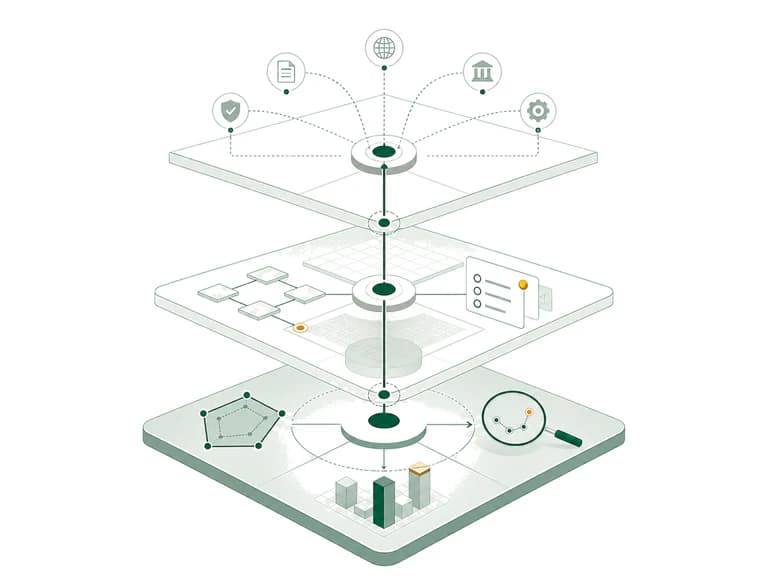
Three layers. One integrated operating model.
Each SPEQ layer addresses a distinct practitioner challenge. Together they form a unified execution system aligned to global GxP requirements across regulated product, process, data, clinical, and laboratory environments.
[ HOW THE LAYERS CONNECT ]
The model is a closed loop, not a one-way waterfall: maturity gaps identified in Layer 03 feed back to re-prioritise regulatory focus (Layer 01) and execution effort (Layer 02).
[ LAYER DETAIL ]
What each layer contains.
Expand each layer to see the specific content, tools, and methodology included. Every item maps directly to a practitioner deliverable.
[ THE FRAMEWORK IN ACTION ]
From a single Annex 1 clause to an inspection-ready system.
The three layers are not abstract. Follow one real requirement as it moves through all three — decoded, executed, then measured.
The requirement
EU GMP Annex 1 (2022) §4 makes a documented Contamination Control Strategy (CCS) mandatory for sterile manufacturing — a holistic, risk-based view of every contamination control across the site.
The execution
SPEQ turns the clause into deliverable work. Assemble the required elements with the CCS Builder, then generate the inspection-ready document from the CCS template — no blank page, no missing sections.
The measure
The Environmental Monitoring domain of the maturity assessment scores where your contamination control actually sits, and the rubric shows what each level looks like — so you know the next move, not just the gap.
One clause, traced across all three layers. Every requirement SPEQ decodes follows the same path — that is the operating model, not a metaphor.
Read the full walkthrough →[ DESIGN PRINCIPLES ]
Six principles that govern how the framework is built.
PRINCIPLE 01
Execution-First
Every element of the framework maps from regulatory requirement to practitioner action. Abstract guidance without implementation methodology is not SPEQ.
PRINCIPLE 02
Risk-Calibrated
ICH Q9(R1) risk principles inform all SPEQ assessment tools and template design. Risk is not an afterthought — it is the organizing principle.
PRINCIPLE 03
Inspection-Ready
Every template, checklist, and procedure is built to produce audit evidence. If it cannot be cited in a 483 response, it does not belong in SPEQ.
PRINCIPLE 04
Standards-Integrated
Cross-referenced natively to FDA, EMA, ICH, USP, and ISO. No separate mapping effort needed — the alignment is built in.
PRINCIPLE 05
Version-Controlled
All SPEQ framework documents follow semantic versioning. Practitioners always know which version of the framework they are implementing.
PRINCIPLE 06
Practitioner-Authored
Built by people who have delivered in regulated environments — not just advised on them. Every clause reflects real inspection experience.
[ STANDARDS ALIGNMENT ]
How SPEQ maps to existing industry standards.
SPEQ complements existing standards — it is the execution layer that sits on top of regulatory requirements, translating them into practitioner actions. All 214 catalog standards are placed across the three framework layers.
17 standards carry a hand-curated three-layer alignment; the remaining 197 are placed automatically from each standard’s primary framework layer.
COMPLETE INDEX — ALL 214 STANDARD
All 214 standards placed across the three layers · 17 hand-curated, 197 derived from each standard’s primary framework layer · Browse the full catalog →
[ THE FRAMEWORK ACROSS THE HUB ]
One framework. Every resource, mapped.
Each layer connects to the working resources behind it — jump straight from the model to the standards, tools, templates, and assessment that operationalise it.
Regulatory Intelligence
The decoded regulatory sources you are cited against.
Execution Methodology
How requirements convert into delivered, inspectable work.
Quality Systems Maturity
Where your quality system sits today, and the path forward.
[ COVERAGE BY DISCIPLINE ]
[ ACROSS THE VALUE CHAIN ]
The same framework serves every organization in the regulated value chain — what you make, and who you are within it.
[ HOW TO USE THE FRAMEWORK ]
Three steps to operationalise SPEQ.
Assess
Run the SPEQ Maturity Assessment to baseline your quality system across five foundational domains — or all twelve in the Comprehensive assessment. Identify your current level and priority gaps.
Start Assessment →Apply
Map regulatory requirements to the execution methodology for your product type and manufacturing environment.
View Standards →Improve
Use gap analysis outputs to build your remediation roadmap. Download templates and tools to accelerate execution.
Browse Templates →[ START HERE ]
Put the framework to work — no download required.
Baseline your maturity
Run the assessment across the GxP quality domains and get an instant scored result.
Start assessment →Browse the standards
Search the decoded standards library, filterable by discipline and regulatory body.
Open library →Get the weekly briefing
Regulatory intelligence and practitioner analysis, delivered to your inbox each week.
Subscribe →